
Last updated: August 2026
Why small water problems deserve attention
Wood rot is rarely the first event. It is usually the result of wood staying wet long enough for decay to develop. That moisture may come from failed caulk, an overflowing gutter, a roof-edge problem, poor flashing, splashback, a leaking threshold, damaged siding, or water repeatedly collecting at the same joint.
The visible soft spot can be smaller than the wet area behind it. Paint and caulk can temporarily hide deterioration, especially around door bottoms, window trim, fascia, soffit transitions, porch details, and horizontal ledges. Catching the moisture source early is what keeps a trim repair from turning into framing, sheathing, or interior finish work.
Early signs you can see without opening the wall
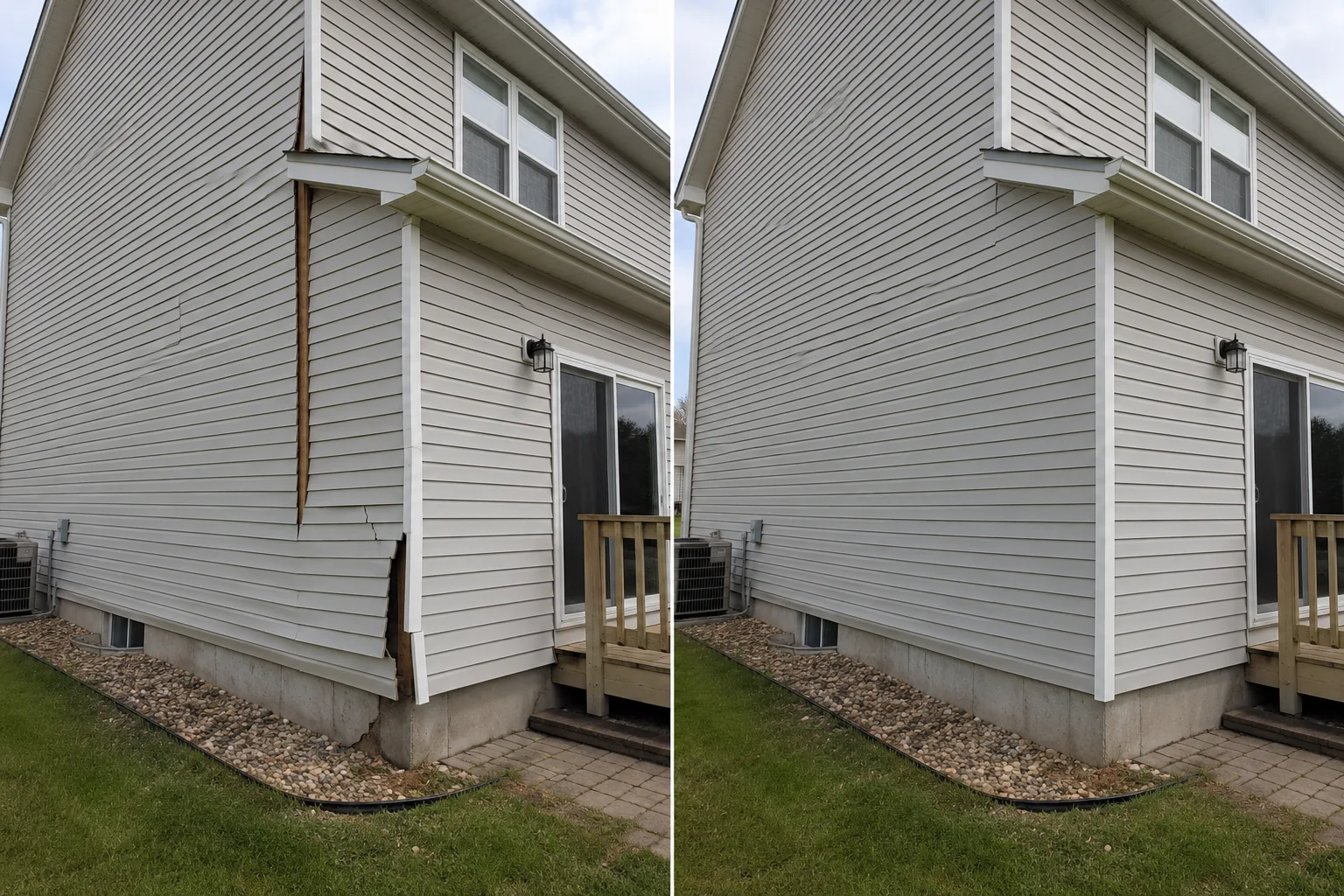
Look for paint that bubbles or repeatedly peels in the same spot, dark staining, swollen fiberboard, separated joints, cracked caulk, trim that feels soft when gently pressed, fasteners that no longer hold, and edges that look fuzzy or crumbly. Around doors and windows, watch for trim pulling away from the wall or gaps that return soon after they were sealed.
Inside the house, warning signs can include staining near a window or exterior door, swollen baseboard, a musty smell after rain, soft flooring at an entry, or drywall that discolors near an exterior opening. None of these proves active rot, but recurring moisture-related symptoms are worth tracing instead of repeatedly painting over them.
The repair should start with the water path
Replacing rotten wood without correcting the water source is a temporary repair. The damaged material may look new, but the conditions that caused the first failure are still present. Before replacement, the scope should consider drainage, caulk joints, flashing, roof runoff, gutter behavior, ground clearance, and how water moves across the surface during rain or snowmelt.
In Cedar Rapids, freeze-thaw cycles can make small openings worse. Water enters a crack or joint, freezes, expands, and helps widen the path. Wind-driven rain can also reach joints that seem protected when the weather is calm. A durable repair deals with the path, not just the rotten piece at the end of it.
When localized wood repair can work well
If the moisture source is corrected and the deterioration is limited to replaceable trim, fascia, casing, sill components, or another non-structural piece, targeted replacement can be practical. The new material needs sound backing and a fastening surface that is not decayed. Sealing, priming, and finish details should match the exposure of the location.
Localized repair becomes less predictable when the wood behind the visible piece is soft, the opening has moved, fasteners will not hold, or damage extends into sheathing or framing. At that point, the scope may need to expand or a specialist may be appropriate depending on the location and severity.
When to stop treating it as a small handyman repair
Active roof leaks, significant structural decay, widespread mold, major insect damage, repeated interior flooding, or damage that appears to involve load-bearing framing should be evaluated by the appropriate specialist. The same is true when electrical components are wet or the source involves plumbing, roofing, or another system outside a handyman repair scope.
A good repair service should be willing to say when the condition has crossed that line. The goal is not to keep every project in-house. It is to identify a responsible next step before cosmetic work covers up something that still needs to be corrected.
Useful photos to send with a repair request
Take one wide photo showing where the damaged area sits on the house, one medium photo showing the entire door, window, soffit, fascia, or trim section, and several close-ups of the soft, cracked, stained, or separated areas. If the problem changes during rain, a photo or short video taken while it is happening can be especially useful.
Also mention when you first noticed the problem, whether it changes after storms, and whether the area has been repaired before. That history can reveal a recurring water path that a dry-day photo does not show.