
Last updated: August 2026
Start by watching where the water goes
The best time to learn about a gutter system is during rain. Water spilling over one short section can indicate a localized clog or low spot. Overflow along an entire run can indicate heavy debris, insufficient drainage, poor pitch, or capacity issues. Water running behind the gutter can point to attachment, flashing, or edge conditions rather than a simple cleaning problem.
Also watch the downspout discharge. A gutter can be perfectly clear at the roofline and still overflow if the downspout or underground drain cannot move water away fast enough. Treating only the visible overflow may leave the actual restriction untouched.
When cleaning is the likely first step
If the gutters are securely attached, joints are intact, and the main symptom is standing debris or water backing up near an outlet, cleaning may restore normal flow. Downspout elbows are common choke points because leaves and roofing granules can collect where the direction changes.
Cleaning becomes maintenance rather than repair when the system works correctly once the obstruction is removed. If the same location continues to hold water or overflow after it is clear, the next question is pitch, outlet placement, drainage, or physical damage.
Common repairable gutter problems
Loose or missing hangers, separated joints, small leaks at end caps, short sections that have lost pitch, disconnected downspouts, damaged elbows, and localized fascia attachment problems can often be repaired without replacing the entire system. The condition of the surrounding material matters because a gutter is only as secure as what it is fastened to.
Sagging should be taken seriously because water is heavy. A low section holds more water, which puts more load on the hangers and fascia, which can increase the sag. Correcting attachment and pitch early can prevent a localized issue from pulling more of the run out of alignment.
Fascia and roof-edge conditions can change the job
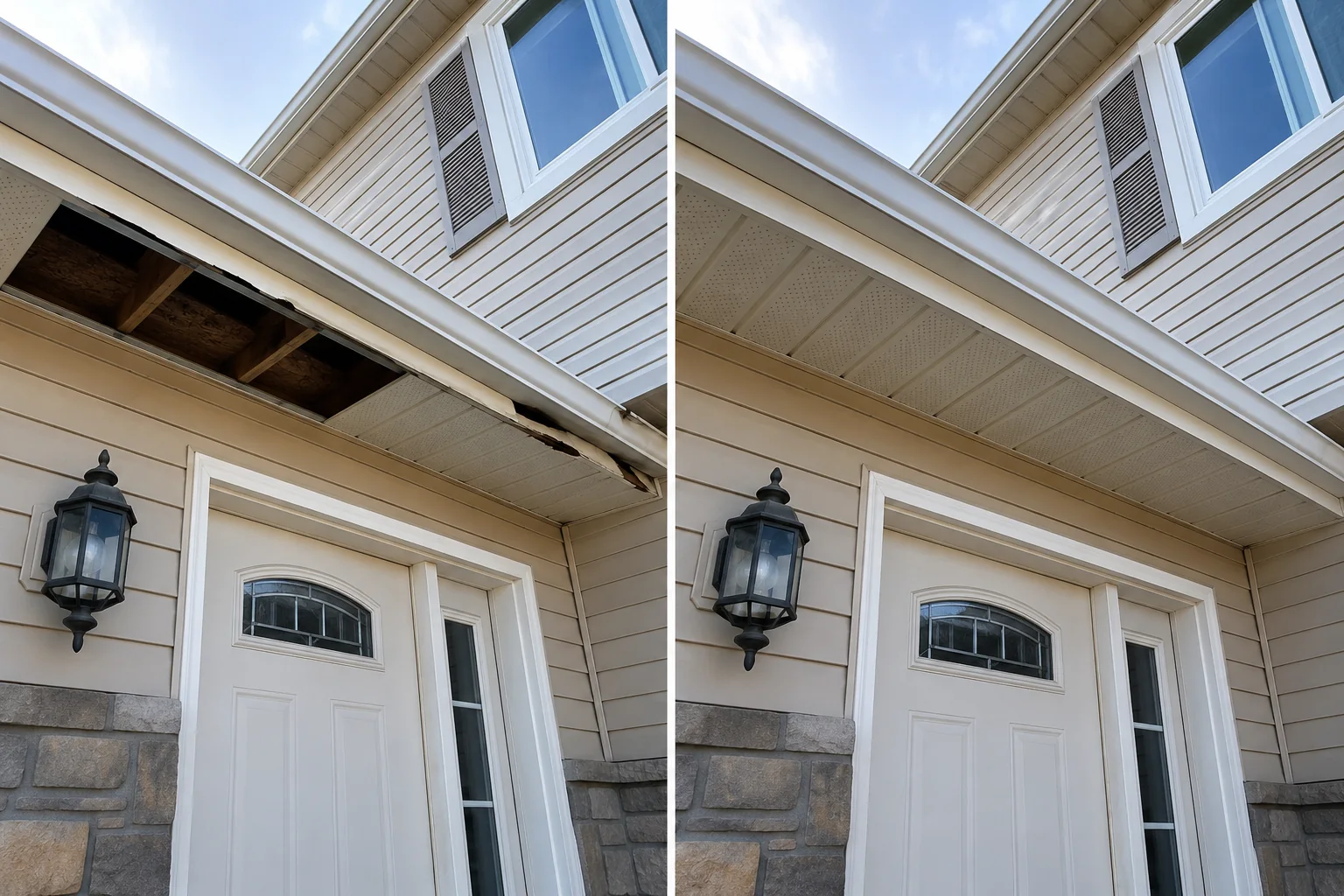
If hanger screws pull out because the fascia is soft or deteriorated, simply moving the fastener a few inches may not be a durable solution. The wood behind the gutter may need repair before the system can be securely reattached. Staining, peeling paint, soft fascia, or water marks behind the gutter are clues that the problem is not limited to aluminum or steel.
Roof-edge and flashing conditions also matter when water consistently travels behind the gutter. A handyman can address many localized gutter and fascia repairs, but active roof leakage or flashing problems may require a roofing specialist depending on the condition.
When replacement becomes the better value
A system with widespread corrosion, multiple failed joints, repeated sagging, extensive deformation, inadequate layout, or recurring repairs across many sections may be past the point where piecemeal work is economical. Replacement can also make sense when major fascia work requires removing most of the existing gutters anyway.
The decision should compare the repair scope with the remaining useful life of the system. One loose corner does not justify replacing a house full of gutters. Ten failing corners, split seams, crushed sections, and weak attachment may tell a very different story.
Cedar Rapids weather makes drainage worth maintaining
Heavy summer rain, wind-blown debris, snow, ice, and freeze-thaw cycles all stress gutters and downspouts in Eastern Iowa. A small low spot can hold water that later freezes. Leaves can create dams that keep fascia and roof edges wet longer than they should be.
A simple habit is to inspect discharge during a hard rain a few times each year and again after major wind events. You do not need to climb a ladder to notice overflow, disconnected downspouts, water dumping at the foundation, or a section that visibly holds water long after the storm.