Last updated: August 2026
Start with the failure, not the product name
A repair-or-replace decision usually gets easier when you stop asking, “How old is this?” and start asking, “What exactly has failed?” A door may be old but need only hinge or jamb work. A newer floor may still need replacement if moisture has damaged a large area underneath. Age matters, but the location and cause of the failure usually matter more.
For small home repairs, the most useful first step is to separate the damaged component from the larger system around it. If the surrounding material is sound and the cause can be corrected, a targeted repair can preserve a lot of useful life. If the damage is widespread, recurring, or tied to a failing system, replacement may be more economical even when a patch is technically possible.
When a targeted repair usually makes sense
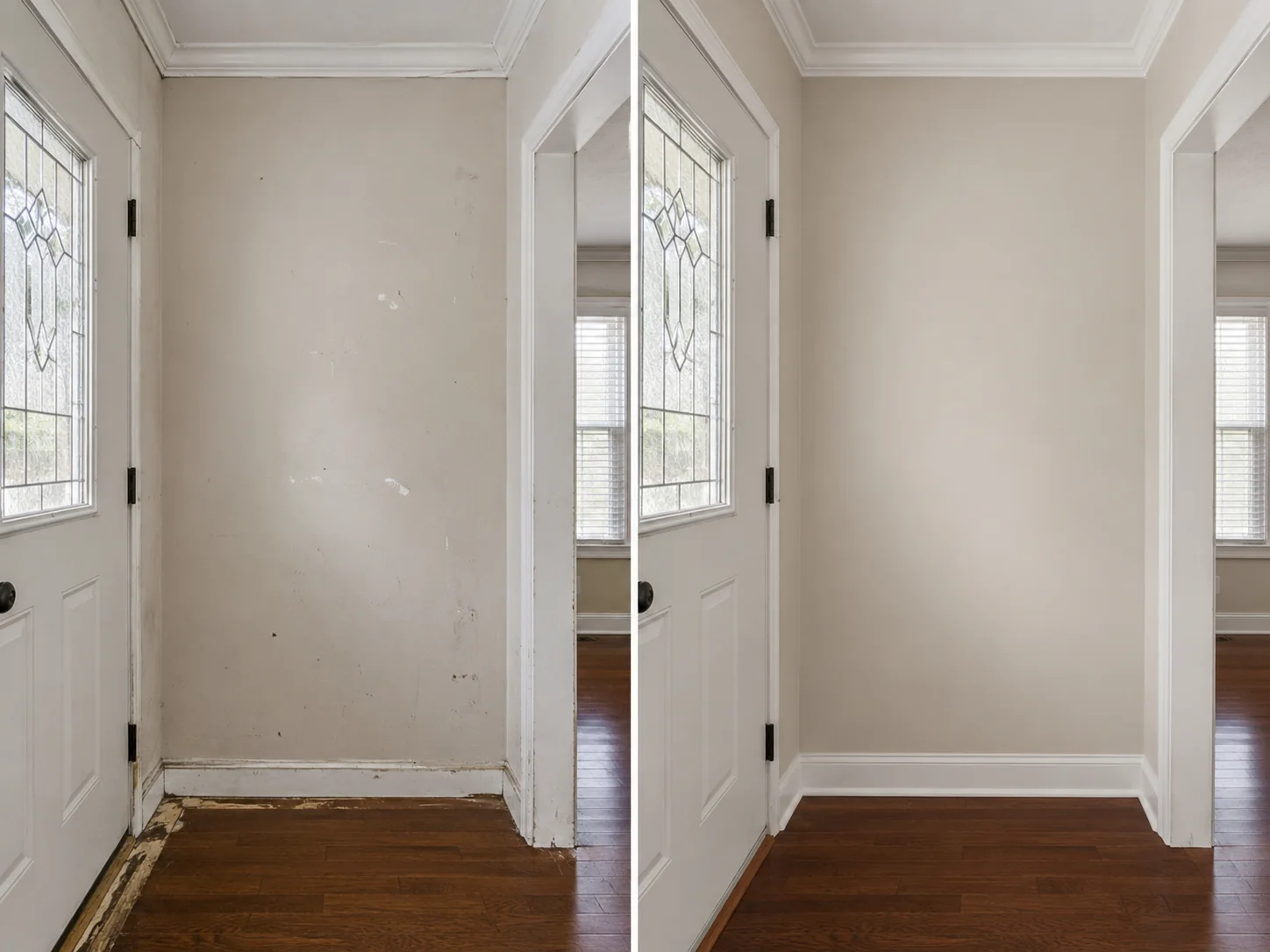
Repair is often the better value when the damage is localized, access is reasonable, matching or compatible materials are available, and the surrounding structure is still solid. Examples include a damaged section of door casing, a few loose gutter hangers, isolated trim rot, one or two damaged floor planks, worn weatherstripping, or a cabinet door that needs hinge and alignment work.
The strongest repair candidates have a clear cause. If a fastener pulled loose because it was undersized, correcting the attachment can solve the problem. If caulk failed because it aged and the substrate behind it is still dry, removal and proper recaulk may be enough. A repair is more valuable when it addresses both the visible symptom and the reason it happened.
When replacement starts making more sense
Replacement deserves consideration when damage is repeated across a large percentage of the component, the underlying material is deteriorated, the item has reached the end of its practical service life, or repair labor approaches the cost of replacing it. Repeated patching can become expensive when each visit treats another piece of the same failing system.
Availability also matters. A damaged piece of older laminate, siding, trim profile, hardware, or discontinued fixture may be difficult to match. Sometimes a technically repairable item produces a poor visual result or requires so much custom adaptation that replacement is the cleaner choice. That does not make repair “wrong”; it changes the value calculation.
Look for the cause that can make either option fail
Before approving repair or replacement, ask what caused the damage. Water entry, movement, poor drainage, loose framing, failed flashing, improper fastening, or repeated impact can destroy new material just as easily as old material. Replacing a rotten trim board without correcting the source of moisture simply resets the clock on the same failure.
This is why photos can help with preliminary scoping but do not always settle the decision. The visible face of a repair may look minor while the material behind it is soft, wet, loose, or out of square. A good scope allows room to verify conditions before promising that a cosmetic patch will solve a deeper problem.
Compare total cost, disruption, and useful life
The cheapest immediate option is not always the lowest-cost decision. A $200 repair that reasonably extends service life for several years can be excellent value. A $200 repair that is likely to be repeated every few months is not. Consider how long the repair is expected to last, whether adjacent work will soon require opening the same area, and how disruptive replacement would be.
Bundling related work can also change the math. If a handyman is already on site for several compatible repairs, a small item that would be inefficient as a standalone visit may make sense as part of the combined scope. The decision should be based on the actual project, not a blanket rule that repair is always cheaper or replacement is always better.
Questions worth answering before you approve the work
Ask what is damaged, what appears to have caused it, whether the surrounding material is sound, whether matching materials are available, and what happens if hidden damage is discovered. For replacement, ask what is included in removal, disposal, trim or finish work, and whether adjacent surfaces will need correction.
A clear written scope protects both sides. It should describe the work being priced and identify important assumptions when conditions cannot be confirmed until disassembly. That is especially useful on older Cedar Rapids homes where previous repairs, multiple layers of finish material, or concealed water damage can make the inside of an opening different from what the surface suggests.