
Last updated: August 2026
A floor is a layered system
Most residential floors include finish flooring over some combination of underlayment and structural subfloor, with joists or other framing below. A visible crack, lifted edge, or soft spot does not automatically tell you which layer has failed. The repair depends on whether the problem is cosmetic, fastening-related, moisture-related, or structural.
That is why a floor can look damaged but feel solid, or look almost normal while flexing underfoot. Before choosing replacement material, determine whether the base beneath it can support a durable repair.
What a soft or spongy spot can indicate
A soft spot deserves more attention than an ordinary squeak. It can mean deteriorated subfloor, water damage, an unsupported seam, previous cutout work, or another loss of stiffness below the finish material. Near toilets, tubs, exterior doors, dishwashers, washing machines, and sinks, moisture should be high on the list of possibilities.
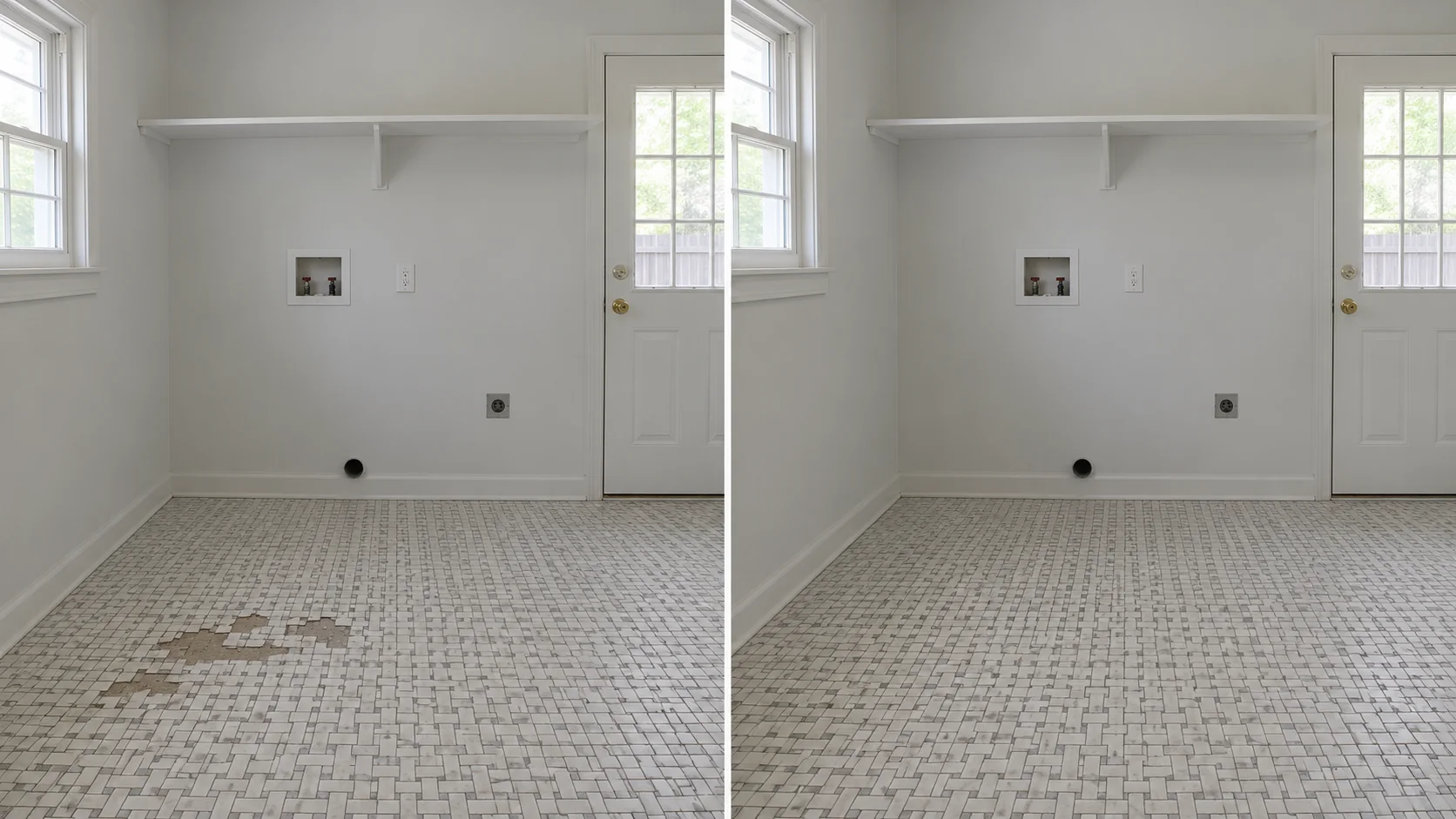
Do not assume a new layer of flooring will solve softness. Covering a weak subfloor can hide the symptom temporarily while leaving the structural layer unchanged. The repair may require removing enough finish material to inspect and replace the damaged section beneath it.
Squeaks and movement are not all the same
Many squeaks come from movement between layers or between subfloor and framing. A squeak without visible deflection can sometimes be corrected through fastening or access from below. A squeak accompanied by bounce, cracking, loose tile, or a noticeably moving seam deserves a closer look.
Fastening through finished flooring without understanding what is below can create new problems, especially with floating floors, radiant systems, plumbing, or finished ceilings underneath. The repair method has to fit the construction and access available.
Swelling, cupping, and lifted edges often point to moisture or movement
Laminate and some engineered products can swell when moisture reaches their cores. Hardwood can cup or crown as moisture changes across the board thickness. Vinyl plank can separate or tent when expansion space, subfloor flatness, heat, or locking joints become an issue. These symptoms are not interchangeable even though homeowners may describe all of them as “buckling.”
The first question is whether the moisture or movement is still active. Replacing damaged pieces before correcting a leak, humidity problem, appliance issue, or wet subfloor can damage the replacement material too.
Matching the visible floor can be the hardest part
Even when the structural repair is straightforward, older flooring can be difficult to match. Sunlight, wear, discontinued colors, plank dimensions, dye lots, and finish changes can make a new piece stand out. Saving spare material from the original installation is extremely valuable for localized repairs.
If an exact match is unavailable, the options may include using a close match, borrowing material from a less-visible area, creating a deliberate transition, or replacing a larger section. The best choice depends on how visible the repair is and how much disruption the homeowner is willing to accept.
When a floor issue needs a broader specialist
Large areas of sagging, suspected joist or beam failure, widespread termite or rot damage, major foundation movement, or significant structural deflection are beyond a routine small floor repair. Active plumbing leaks should be stopped first, and sewage or extensive mold conditions require appropriate remediation.
For localized damage, good photos should include the whole room, the damaged area, nearby water sources, thresholds or transitions, and any view from below if an unfinished basement or crawlspace provides access. Measurements and spare-flooring information can make preliminary scope decisions much more accurate.