
Last updated: August 2026
Think about the system, not just the symptom
A ceiling stain may look like drywall work, but the first trade depends on whether the source is roofing, plumbing, condensation, or an old leak that has already been corrected. A loose exterior receptacle may look like a wall repair, but the electrical condition needs to be safe before finish work matters. Choosing the right trade starts with the system that could be causing the symptom.
Handyman work is strongest where carpentry, adjustment, assembly, mounting, trim, finish repair, maintenance, and small multi-skill projects overlap. It is not a substitute for every specialty license, diagnostic tool, or regulated trade.
Projects that commonly fit a handyman
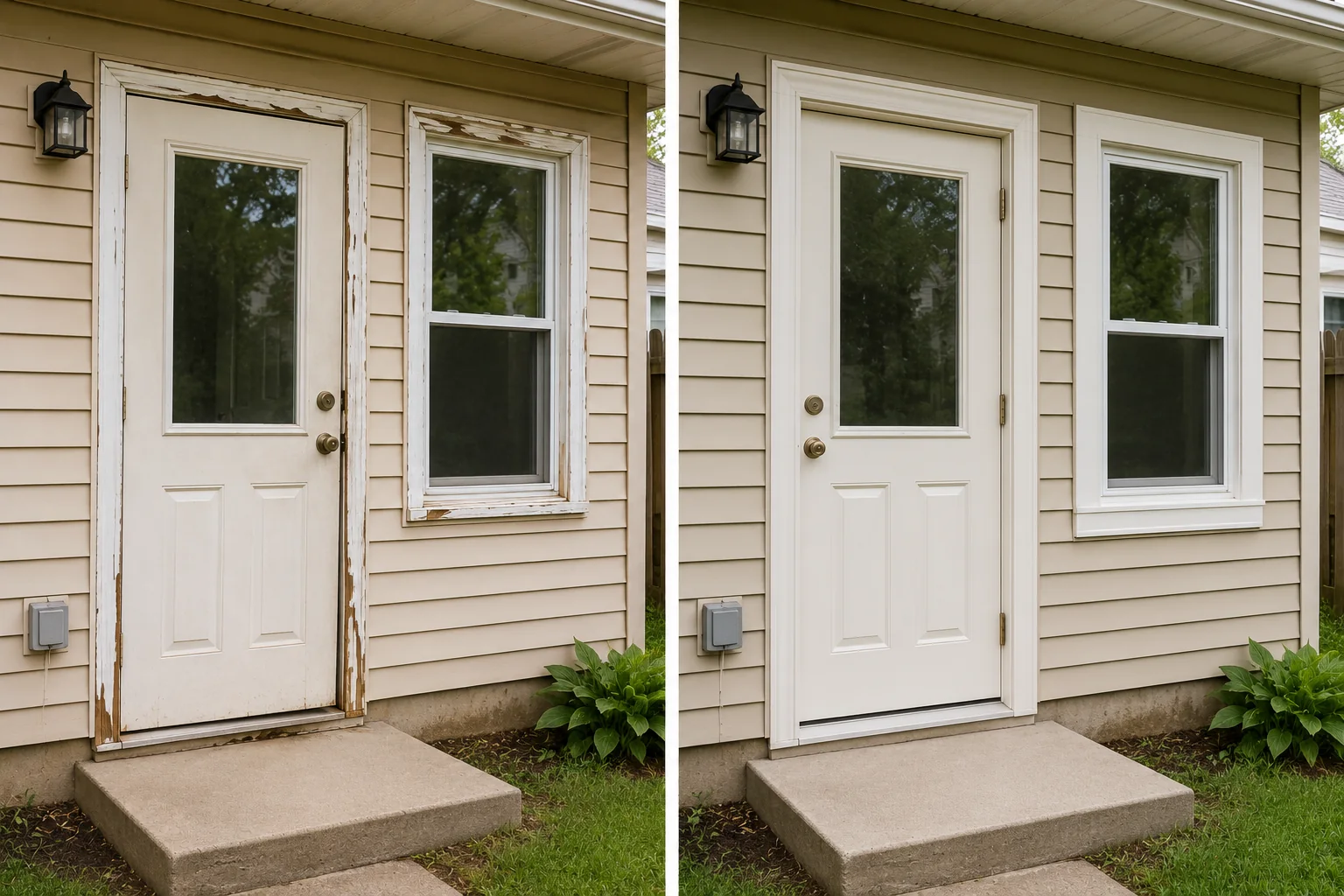
Typical handyman scopes include door adjustment and jamb repair, small trim and wood-rot repairs, cabinet hardware and alignment, baseboard and casing repair, shelving and wall hanging, furniture or product assembly, small flooring repairs, screens, caulk and grout maintenance, minor exterior trim work, and combined punch lists.
The common theme is a defined, localized project where the work can be safely performed within the contractor's scope and where a full specialty crew or remodeler would be inefficient. Many homeowners need exactly this middle ground.
Start with the appropriate licensed or specialty trade for system work
Active plumbing leaks, gas piping, electrical circuits or panels, HVAC refrigerant or equipment diagnosis, major roofing, foundation or structural engineering, significant pest damage, hazardous material, sewage, and large mold remediation generally belong with the appropriate specialist. Local rules and project specifics can also affect permits and licensing requirements.
A handyman may still be useful before or after the specialty work. For example, a plumber may correct a leak and a handyman may repair the opened drywall, trim, cabinet, or flooring afterward. Separating the system repair from the finish repair often produces a cleaner scope.
Do not let a cosmetic repair hide an active cause
If drywall is wet, find the leak before patching it. If exterior trim is rotten, trace the water path before replacing the board. If a floor is soft beside a toilet, make sure the plumbing and moisture condition are understood before covering the area with new finish material.
This is one of the easiest ways to waste money in home repair: hiring the finish trade first because the finish is what you can see. The visible damage may be the last link in the chain, not the first.
When a remodeler or general contractor is the better fit
A collection of small repairs can be ideal handyman work. A coordinated project involving multiple rooms, layout changes, substantial demolition, multiple licensed trades, engineering, permits, and a long construction schedule is a different kind of job. That is where a remodeler or general contractor may provide better project management.
The dividing line is not simply price. Complexity, trade coordination, permit responsibility, structural scope, and the amount of unknown work all matter. Trying to force a remodel into a handyman format can create the same inefficiency as calling a remodeling company for one sticking door.
A good first conversation should narrow the lane
Describe the symptom, location, history, and anything that makes you suspect water, electrical, plumbing, structural movement, or another system. Send photos that show context. A responsible contractor should be able to tell you whether the project sounds like a reasonable fit, whether more information is needed, or whether another trade should be your first call.
There is no advantage in paying two companies to discover the same obvious scope mismatch. Clear boundaries are part of good service, especially for a handyman company that intentionally works across many small repair categories.