
Last updated: August 2026
The pattern of the problem gives useful clues
A door that rubs at the top latch-side corner points to a different problem than one that drags evenly across the floor. A latch that misses the strike by an eighth of an inch is different from a jamb that is split around the hardware. Before sanding or cutting anything, look at where the door contacts the frame and how the gaps around the slab have changed.
Open and close the door slowly. Watch the hinge side, latch side, top gap, and clearance at the floor or threshold. Fresh scrape marks, shiny screw heads, loose hinges, or a gap that tapers dramatically from top to bottom can narrow the likely cause before any material is removed.
Loose hinges are common—and often repairable
Door weight works on hinge screws every time the door moves. If screws loosen or the wood around them wears out, the door can sag enough for the latch to miss or the top corner to rub. Sometimes the correction is as simple as properly securing the hinge to sound material and realigning the door.
The key phrase is “sound material.” A longer screw does not fix a jamb that is split, rotten, crushed, or repeatedly stripped. If the hinge area no longer provides solid attachment, the repair needs to address the damaged wood rather than continuously installing larger fasteners into a failing base.
Humidity and seasonal movement can change a good door
Wood doors and frames can absorb moisture and swell during humid periods, while winter conditions can dry materials and open gaps. Older homes also move slightly over time. A door that behaves differently by season may not need the same correction as a door that suddenly shifted and never returned.
Aggressively planing a swollen door during the most humid week of summer can leave an excessive gap when conditions dry out. The better approach is to determine whether the door is truly oversized, whether paint buildup is contributing, or whether hinge and frame alignment should be corrected first.
Exterior doors add thresholds, weatherstripping, and water exposure
Exterior entry doors have more variables than interior doors. The slab has to close and latch while also meeting the threshold and weatherstripping well enough to limit drafts and water entry. A door can be aligned enough to latch but still leak air, rub a threshold, or allow rain at a damaged lower jamb.
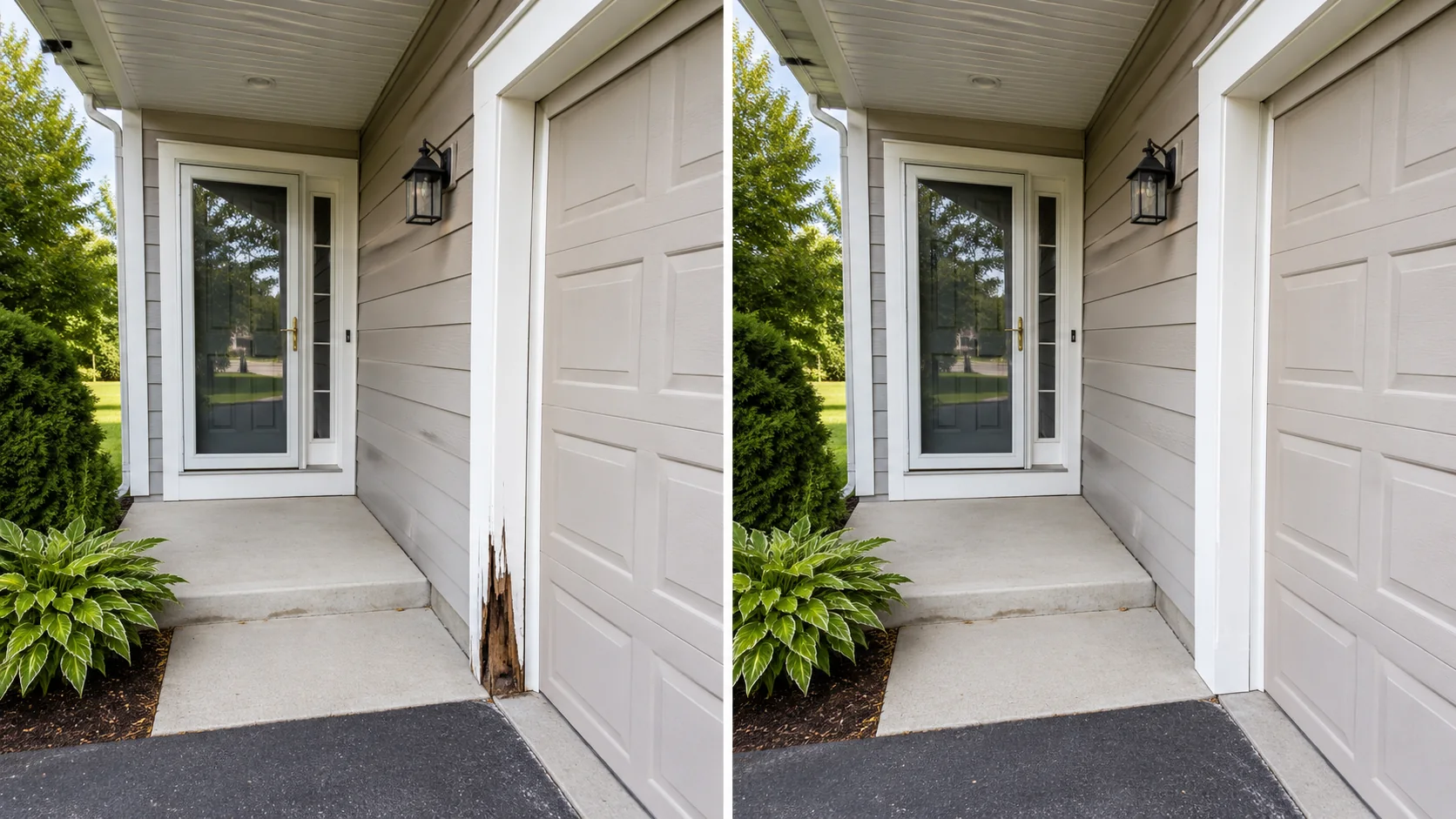
Soft wood near the bottom of an exterior jamb, staining at the threshold, or repeated sealant failure deserves attention before cosmetic adjustment. Water damage can weaken hinge or strike attachment and can turn what looks like a simple alignment issue into a jamb or trim repair.
When trimming the door is appropriate—and when it is not
Trimming or planing can be appropriate when the slab itself is the confirmed source of interference and the frame is reasonably square and stable. It should not be the first response to a sagging hinge, a moving jamb, a loose frame, or swelling caused by active moisture. Removing wood is permanent; hinge and frame corrections often are not.
The goal is an even operating gap, secure hinges, a latch that engages without forcing the door, and appropriate clearance at flooring or the threshold. On painted or finished doors, any newly exposed edge also needs appropriate sealing or finishing so the correction does not create a moisture problem later.
Signs that the opening needs a closer look
Multiple doors in the same area suddenly changing, large diagonal wall cracks, visibly racked frames, severe floor movement, or recurring misalignment after proper repair can point beyond the door itself. Structural movement should not be diagnosed by shaving every door until it closes.
For a typical single-door issue, photos of the whole opening, hinges, strike plate, rub marks, and the top/side gaps can help establish a likely starting scope. If the frame is damaged or the problem appears tied to movement in the building, the next step may need to be broader than ordinary door adjustment.