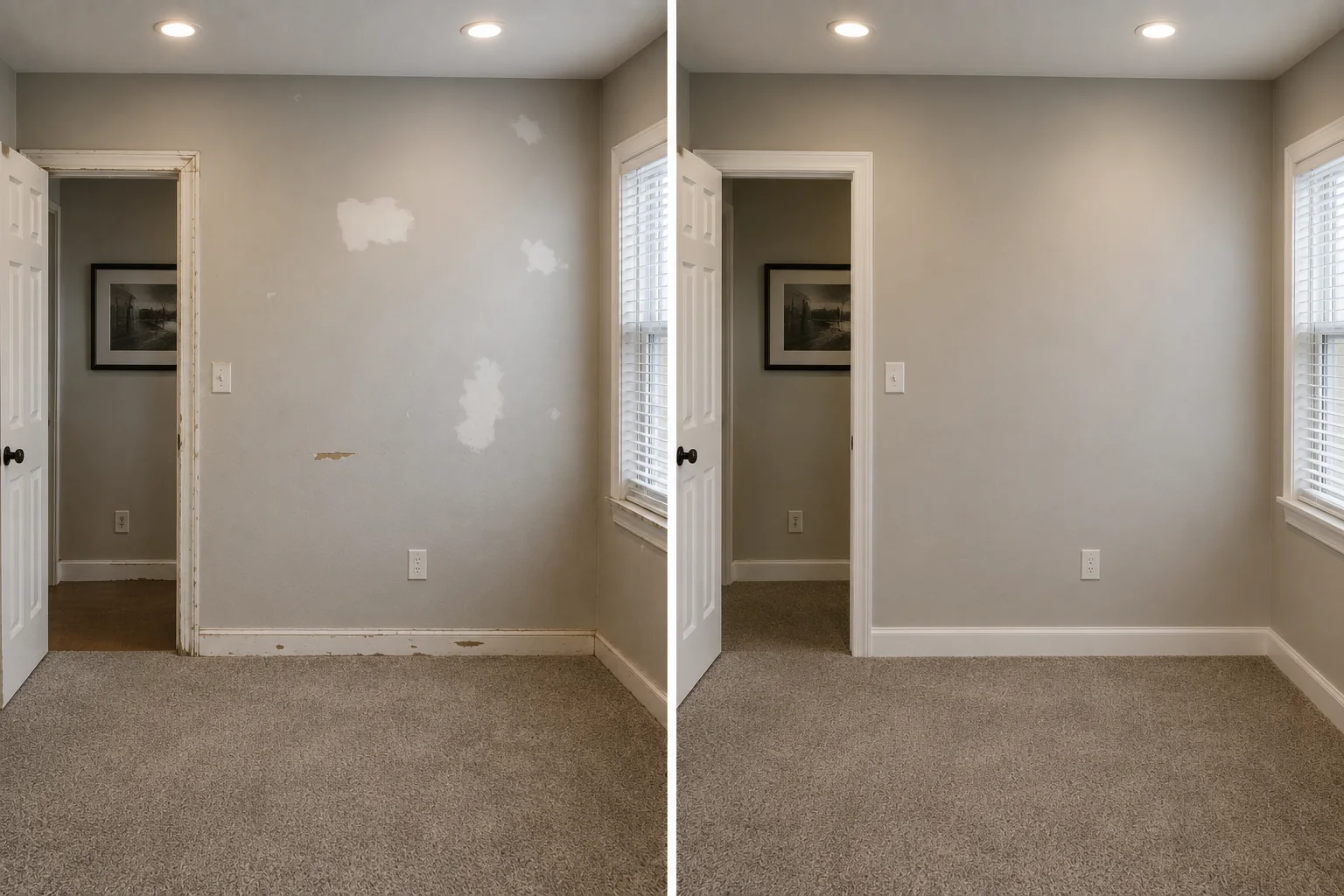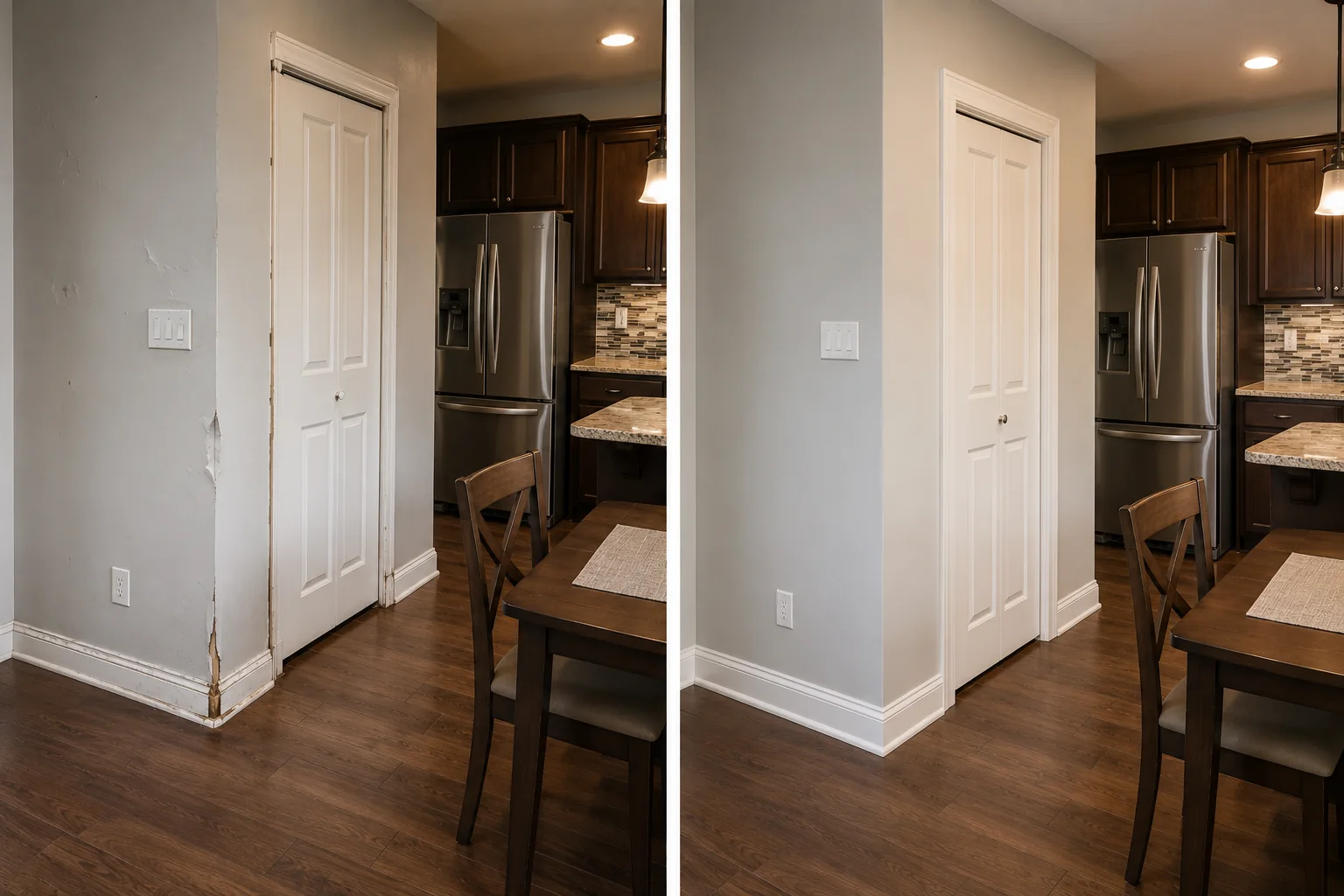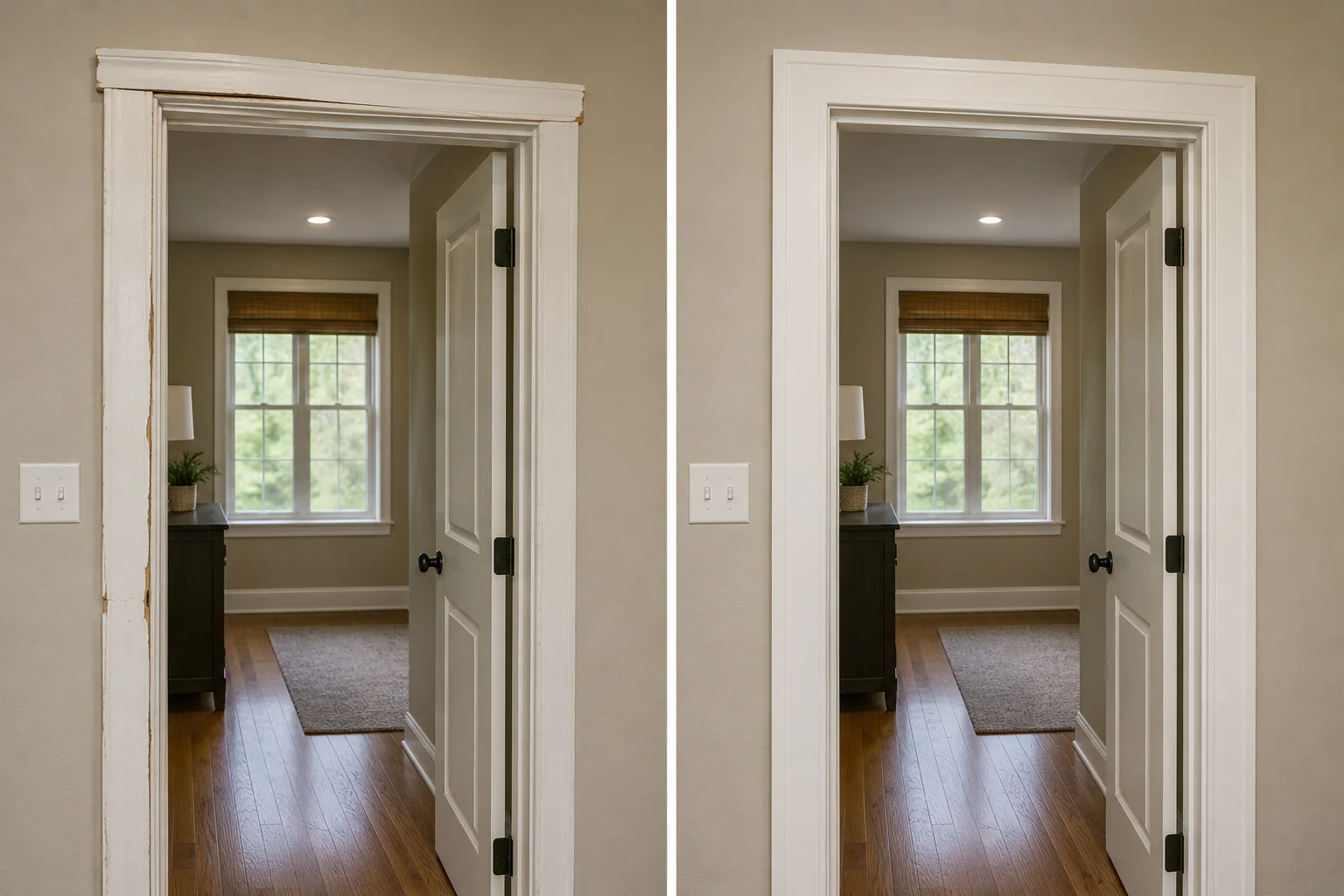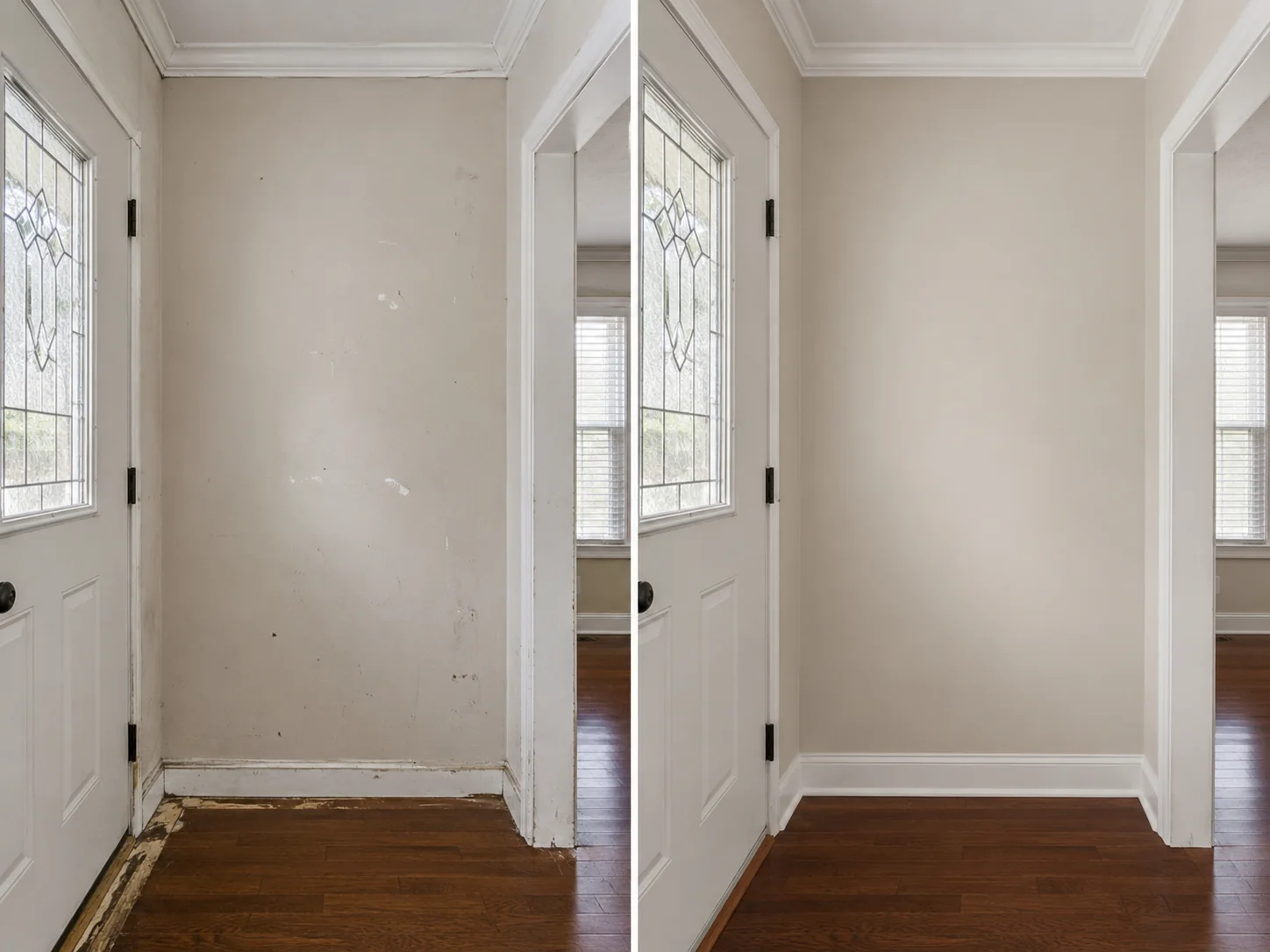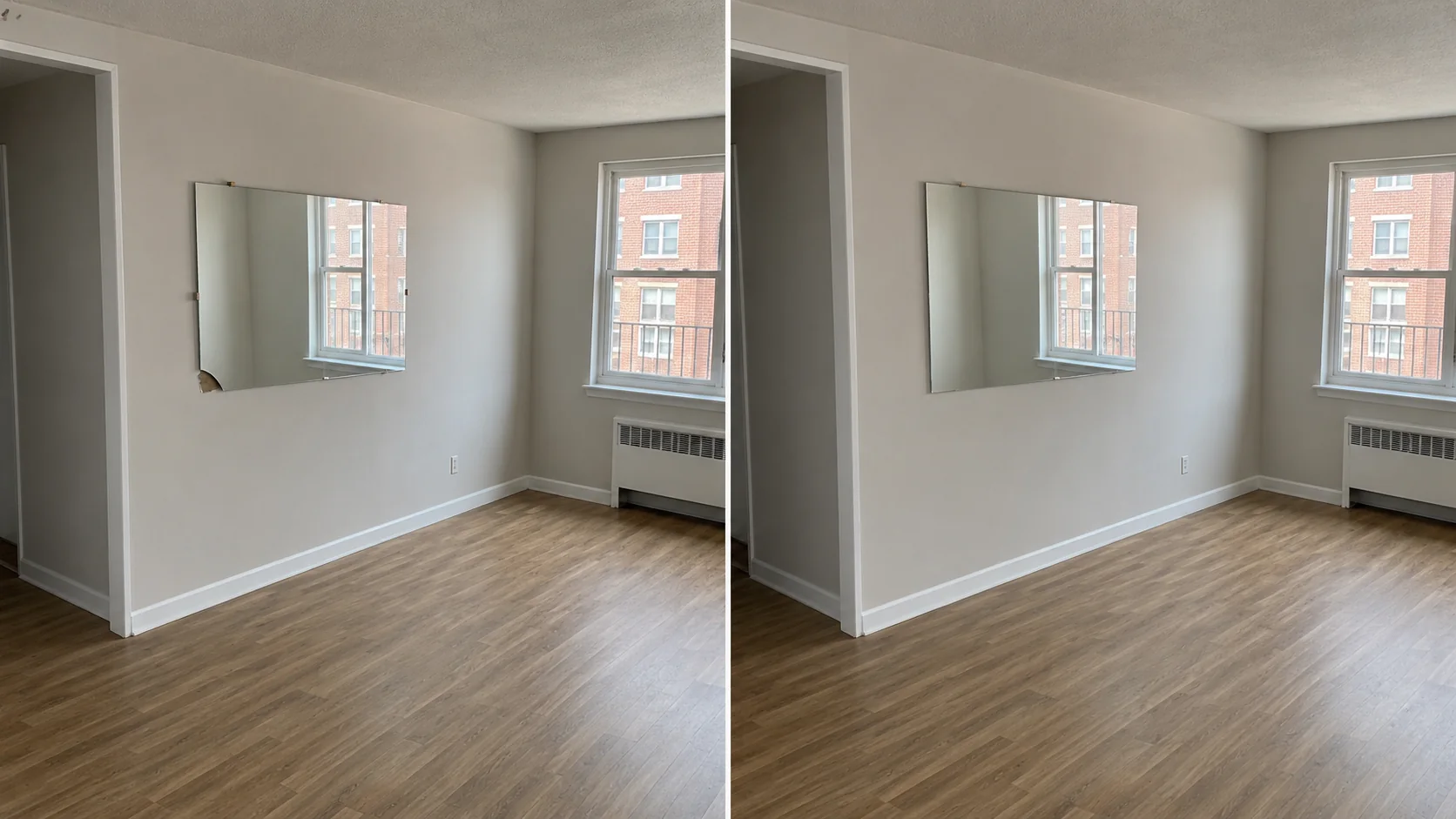
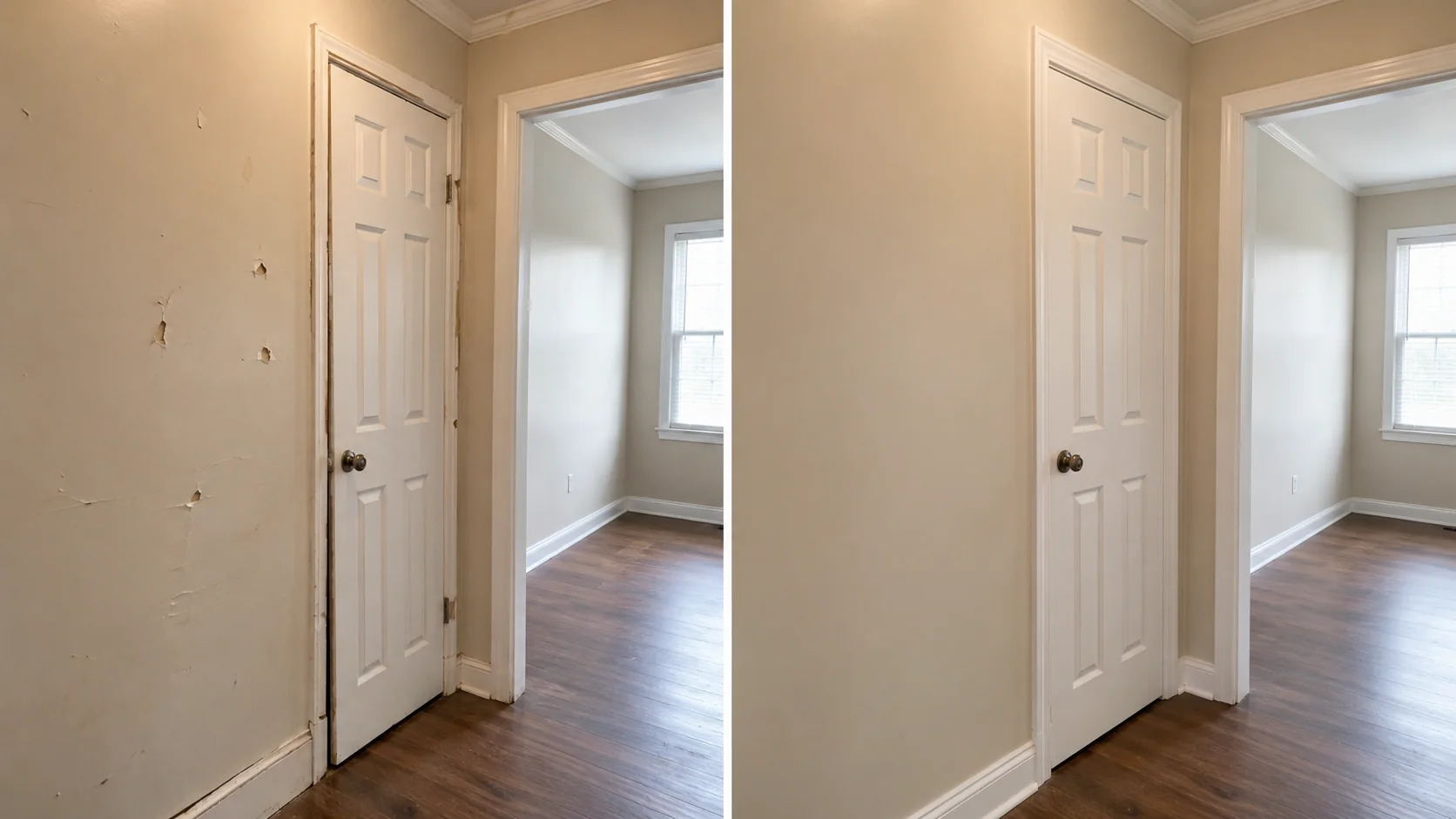
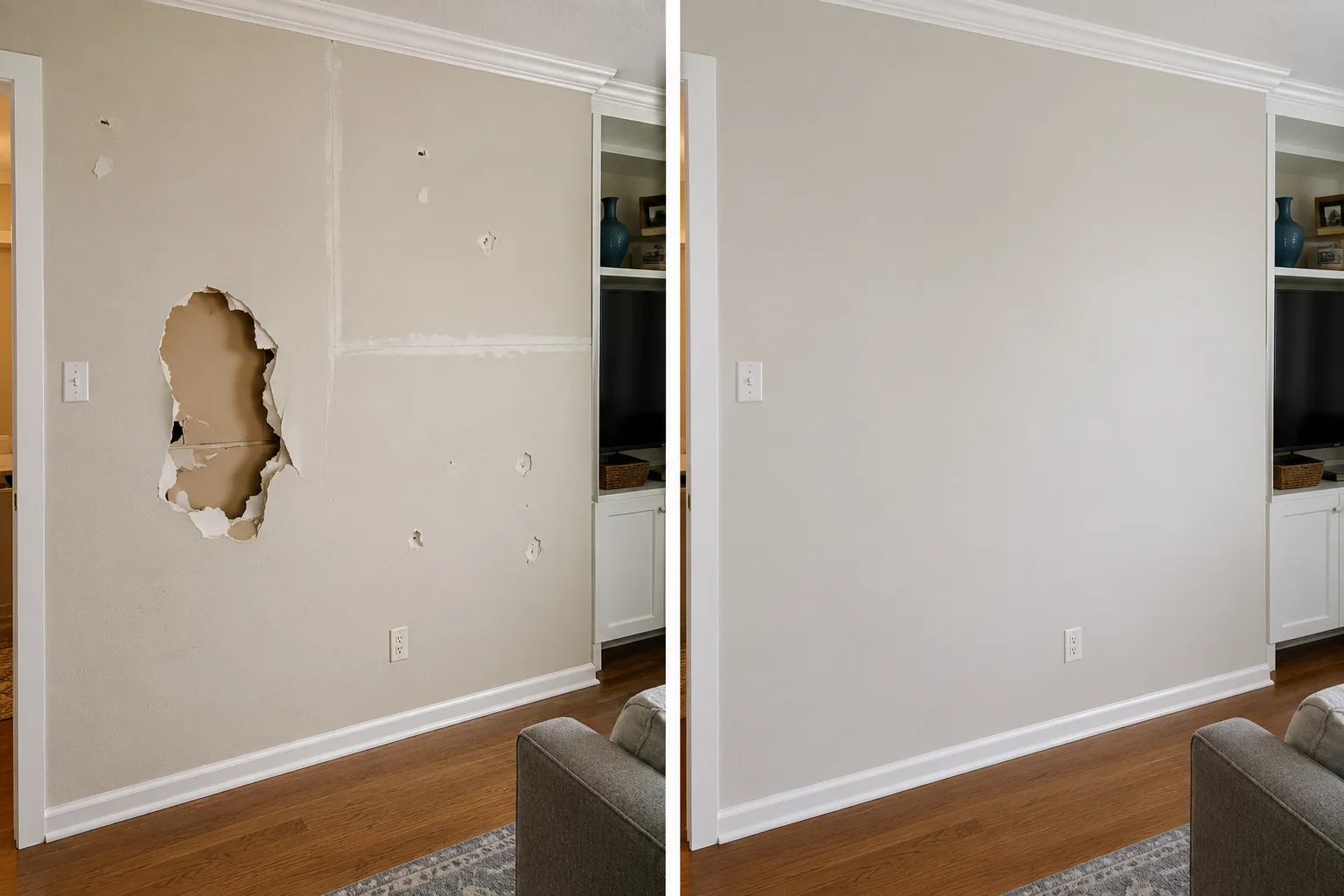
Small wall holes & anchor damageLocalized wall damage can often be patched and blended without replacing a large section.
Drywall repair & wall finishing in Cedar Rapids
Repair holes, cracks, damaged seams, ceilings, corners, nail pops, access openings, and textured drywall — including texture matching and popcorn ceiling texture removal when the existing material and project conditions are suitable.
Drywall repair that goes beyond filling a hole
Drywall damage is one of the most common handyman calls in Cedar Rapids. A doorknob hole, removed wall anchor, plumbing access opening, cracked seam, damaged corner, ceiling patch, or failed piece of joint tape can make an otherwise good room look unfinished. Five Seasons Handyman repairs small and medium drywall problems with a defined scope that can include patching, taping, joint compound, sanding, texture work, primer preparation, and painting when painting is part of the approved project.
A good drywall repair is more than covering the opening. The backing, patch thickness, joint treatment, feathering, existing texture, lighting, paint sheen, wall age, and cause of the damage all affect the finished result. We review those conditions before pricing the work so the repair plan matches the wall you actually have.
Common drywall problems
These are the kinds of wall and ceiling repairs homeowners commonly call us about. The final scope depends on the size of the damage, what caused it, and the finish around it.
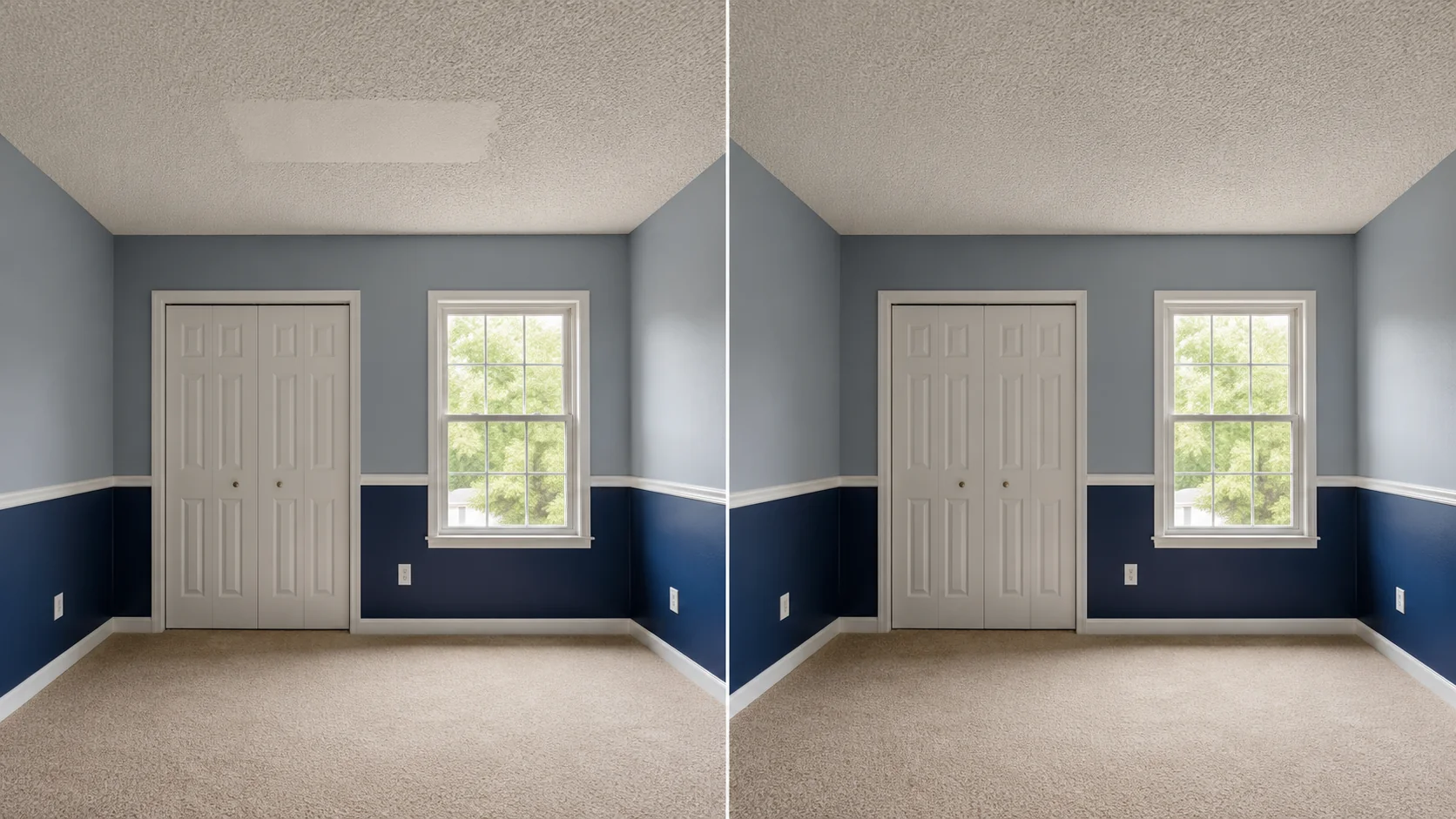
Drywall repair examples
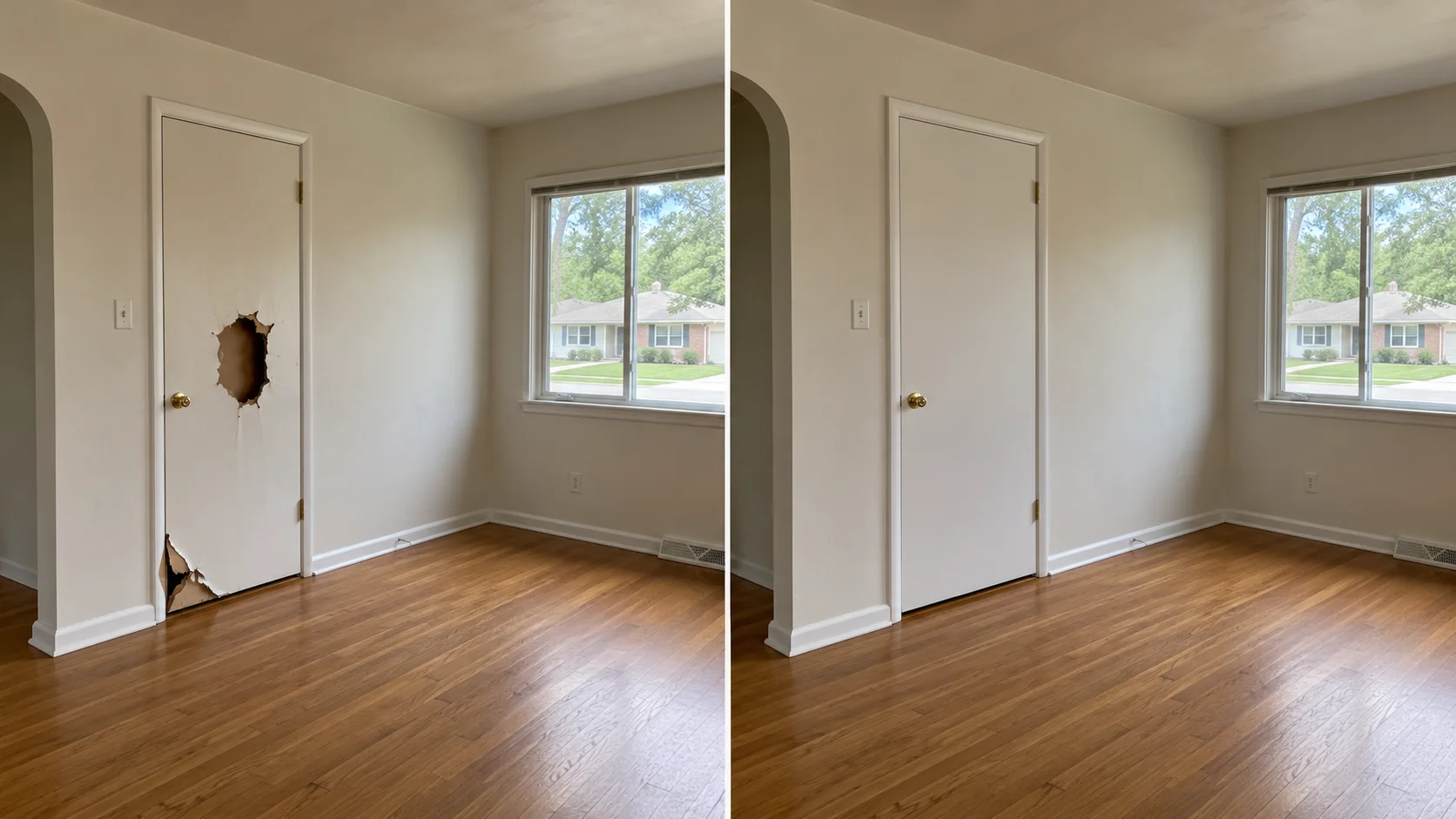
A small anchor hole, a larger opening, and a ceiling patch do not get approached the same way. These repair examples show why the size, location, backing, finish, and surrounding texture matter.
One of the hardest parts of a visible patch
Many Cedar Rapids homes do not have perfectly smooth drywall. Walls and ceilings may have orange-peel, knockdown-style, sprayed, rolled, stomped, hand-applied, or other textured finishes. When a textured surface is patched, the texture has to be considered separately from the structural patch. Simply making the drywall flat can still leave a repair that stands out because the surrounding pattern is different.
Texture matching is an approximation process, not a factory reset. Existing texture may have been applied decades ago, painted multiple times, repaired before, or installed by a technique that is difficult to reproduce exactly in a small area. We look at texture depth, pattern, spacing, paint buildup, patch size, and lighting, then choose a practical blending approach. Larger blend areas can sometimes produce a more consistent appearance than trying to duplicate a complex pattern inside a tiny square.
Ceiling updates and repair preparation
Popcorn or acoustic ceiling texture can be removed as part of an interior refresh when the ceiling material, coatings, access, and room conditions are appropriate. Removal may involve protecting the room, softening or scraping suitable texture, repairing damaged drywall or seams underneath, skim work where needed, sanding, priming, and preparing the ceiling for the new finish selected in the approved scope.
Removing texture does not guarantee that the drywall underneath will immediately be paint-ready. Old ceilings can hide uneven joints, fastener pops, repairs, stains, torn face paper, or inconsistent finishing that was acceptable when texture covered the surface. Those conditions may require additional drywall finishing after the texture is removed.
Older popcorn-style ceiling materials can sometimes contain asbestos or other materials that should not be disturbed without appropriate evaluation. Five Seasons Handyman does not treat an unknown older texture as automatically safe. If a ceiling is suspected of containing asbestos or another regulated hazardous material, appropriate testing and any required specialist abatement must be resolved before ordinary scraping or disturbance proceeds.
Repair the cause, not just the symptom
Wet, soft, mold-suspect, or actively stained drywall should not simply be patched over. The moisture source and affected material need to be understood before a cosmetic repair makes sense.
A crack that repeatedly returns can be a sign of movement at a seam, framing transition, or other condition. We can repair ordinary drywall failure, but a structural concern may need a different professional before finish work.
A clean patch needs solid edges and appropriate backing. Crumbling gypsum, badly damaged face paper, or a large unsupported opening can change how much material has to be removed before rebuilding the area.
Next step
Send photos of the wall or ceiling damage, approximate dimensions, and tell us whether texture matching, popcorn removal, priming, or painting should be included. Add the rest of your punch list too — estimates are free.
Choosing the right repair
How drywall repair is actually completed
We review the opening, surrounding drywall, texture, paint, likely cause, access, and the finish level you want.
Loose material is removed as needed and backing or support is added when the patch requires it.
Compatible drywall is fitted, joints are taped or otherwise reinforced as appropriate, and damaged corners are rebuilt when included.
Compound is built in controlled coats and feathered beyond the patch so the transition is less visible after sanding and paint.
The repair is sanded and checked under the room conditions. Texture is matched or blended when the surrounding surface requires it.
Drywall compound and exposed paper need appropriate preparation. If painting is in the approved scope, the repaired area or larger wall/ceiling area is finished as planned.
What affects a drywall estimate
A small waist-high wall patch is different from a ceiling opening, stairwell repair, high wall, or damage behind fixtures and built-ins.
Smooth-wall finishing, texture matching, popcorn removal, repeated skim coats, and large blend areas require different amounts of preparation and return work.
A patch can be left paint-ready or combined with painting. Existing sheen, fading, color availability, and whether an entire wall or ceiling should be coated affect the scope.
Plan the whole project
Home repair projects often overlap. These services are linked because homeowners commonly need them together or because one repair can expose another condition.
Interior painting for bedrooms, offices, hallways, living areas, closets, accent walls, and small room-refresh projects — including minor prep and patching.
Learn moreTrim and finish carpentry repair in Cedar Rapids for baseboards, casing, shoe molding, quarter round, transitions, and damaged interior trim.
Learn moreTV mounting and heavy wall-hanging service for televisions, soundbars, large mirrors, artwork, shelves, and compatible wall-mounted items.
Learn moreSmall carpentry and wood repair in Cedar Rapids for trim, jambs, blocking, thresholds, shelving, damaged wood, small framing corrections, and custom repair d...
Learn moreMove-in and move-out handyman help for mounting, furniture assembly, window treatments, shelves, door adjustments, small repairs, patches, and punch-list work.
Learn morePre-listing handyman repairs for doors, trim, drywall, paint, screens, caulk, cabinets, railings, concrete touch-ups, and the small defects buyers notice.
Learn moreLocal handyman service
Five Seasons Handyman provides drywall repair for homeowners, landlords, property managers, and small commercial properties in Cedar Rapids and nearby Linn County communities. If you are outside Cedar Rapids, send the address with your request so we can confirm the current service area.
The goal is simple: make it easy to hire one local handyman company for a defined repair or installation and add compatible punch-list items while we are already planning the visit.
Helpful before your estimate
Planning Guide
A practical Cedar Rapids guide to deciding when a small home repair is worth fixing, when replacement makes more sense, and what changes the scope.
Read guidePlanning Guide
Learn which wide, medium and close-up photos help a handyman understand a home repair request, plus what measurements and project details to include.
Read guideQuestions homeowners ask
These answers cover common service, scope, and pricing questions. Your actual project still needs to be reviewed before work is scheduled.
We can match or blend many common wall and ceiling textures. Exact invisibility cannot be promised because old texture, repeated paint layers, lighting, and the original application method can make a perfect duplicate unrealistic. We discuss the likely finish before work begins.
Yes, popcorn-style ceiling texture removal can be reviewed when the material and project conditions are suitable. The ceiling may need additional drywall finishing after removal. Unknown older texture is not automatically treated as safe to disturb; suspected hazardous material must be appropriately evaluated before normal removal work.
Often, yes, after the underlying trade work is complete and the opening is ready to close. Send photos and dimensions so we can review the backing, patch size, texture, and painting needs.
Yes. Drywall repair can be combined with interior painting when both are included in the approved scope. Depending on color, sheen, fading, and patch location, painting the full wall or ceiling plane may give a more consistent appearance than touching only the repaired spot.
That depends on the wall condition, texture, light, paint sheen, color match, and size of the blend area. The goal is a durable, well-finished repair, but existing surfaces can limit how perfectly a new patch disappears.
We can repair drywall after the moisture source has been corrected and the affected area is suitable for repair. Active leaks, wet material, significant mold concerns, or extensive hidden damage need to be resolved before cosmetic closing and finishing.
Yes. Five Seasons Handyman provides free estimates. Photos, dimensions, product information, and a clear description can help us understand the starting condition before scheduling.
No. Approved work is priced by the defined job rather than leaving you with an open-ended hourly meter.
Usually, yes. Include the full punch list when you contact us. We can identify which repairs and installations make sense to combine into one planned scope.