
Last updated: August 2026
Inspect the unit before the reset begins
The best turnover inspection happens before fresh paint, deep cleaning, and new flooring hide the condition left by the previous tenancy. Walk every room and photograph walls, floors, doors, windows, cabinets, fixtures, trim, and exterior entry points. Test doors and windows rather than simply looking at them.
Record what is tenant damage, normal wear, deferred maintenance, and an optional upgrade separately. Those categories may matter for accounting, deposit documentation, scheduling, and deciding which work is necessary before the next occupancy.
Prioritize water, security, and safety
Active leaks, soft floors, loose railings, broken exterior doors, windows that will not secure, failed smoke or carbon-monoxide devices, significant trip hazards, and similar concerns belong ahead of cosmetic work. A beautiful repaint has little value if the unit is still taking on water or cannot be secured.
Use the appropriate trade for specialty systems. Plumbing leaks, electrical defects, HVAC problems, roofing, structural work, and regulated safety equipment may need specialists. The turnover plan should coordinate those items rather than forcing everything onto one handyman list.
Work from dirty and destructive to clean and finished
Sequence matters. Demolition, drywall patches, door-jamb repairs, subfloor work, and trim replacement should generally happen before final cleaning and touch-up paint. Flooring work may need to occur before baseboard completion. Caulk and sealant need clean, dry surfaces and adequate cure time.
A poor sequence creates rework: cleaners return after sanding dust, painters touch up walls after shelving installation, and new flooring is exposed to messy repairs that should have happened first. Even a small rental can benefit from a simple written order of operations.
Build the punch list by room and component
Use consistent categories: entry/security, walls and ceilings, doors and hardware, windows and screens, cabinets, flooring, bathroom, kitchen, closets, lighting/fixtures for the proper trade, and exterior items. Consistency makes it easier to compare units and notice recurring problems across a portfolio.
Quantify each item. “Patch four wall anchors in bedroom two” is schedulable. “Fix walls” is not. “Adjust two bifold doors and replace one damaged knob” tells a contractor far more than “closet problems.”
Separate make-ready repairs from upgrades
Turnover pressure can make every dated finish feel urgent. Decide whether the goal is restoring function and clean condition, improving rentability, or completing a larger renovation. Those are different scopes. Replacing a damaged piece of trim is a repair. Re-trimming the whole unit in a new profile is an upgrade.
Keeping those decisions separate prevents optional improvements from delaying occupancy-critical work. It also helps owners measure what is being spent on ordinary turnover versus capital improvement.
Create records you can reuse next time
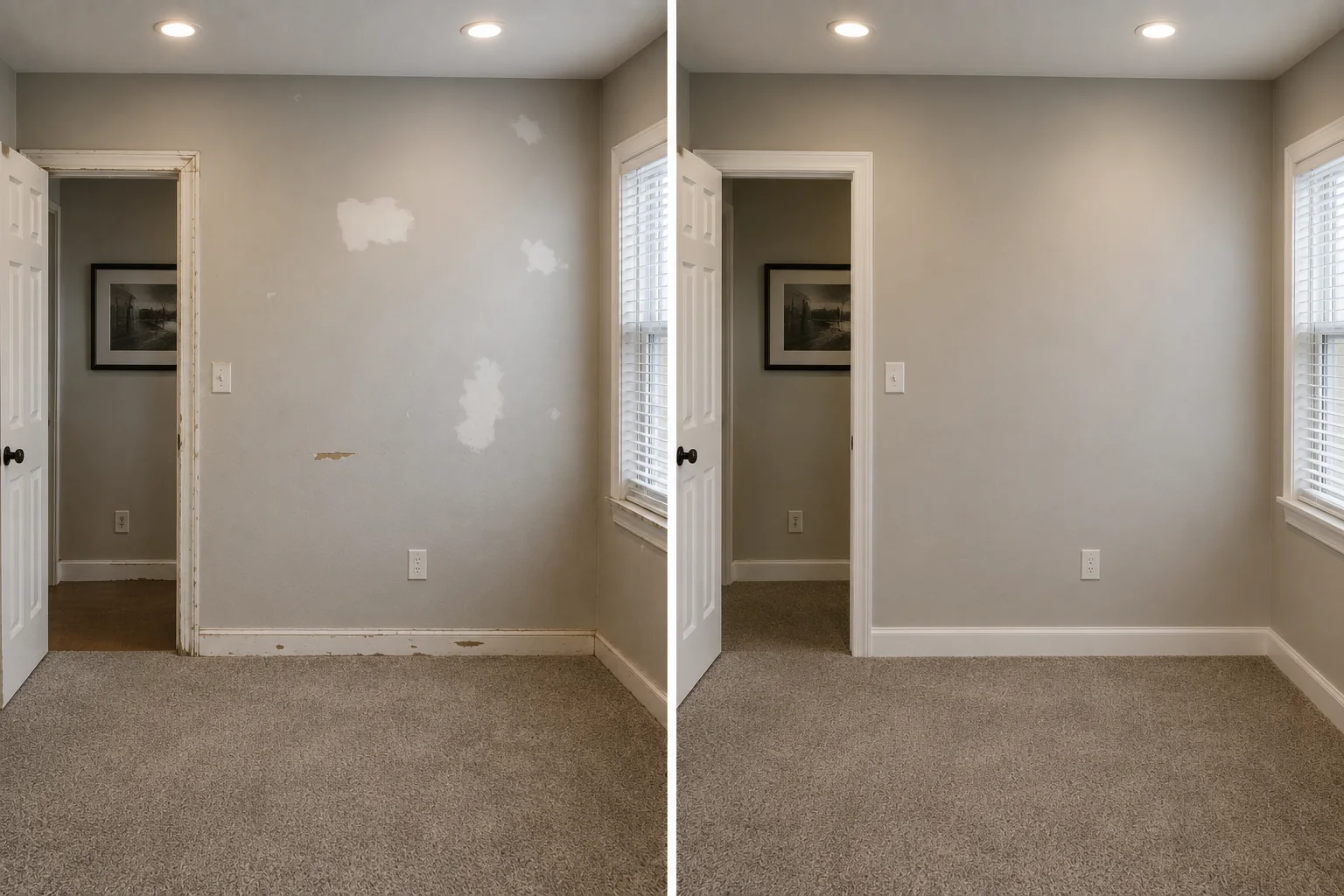
Save the completed punch list, before-and-after photos, product information, paint colors, flooring details, hardware types, and notes about recurring problems. The second turnover becomes easier when you know what material was used and which areas have a history of failure.
For multi-unit owners, standardizing common hardware, caulk colors, paint, shelving, door hardware, and other repeat items can reduce future sourcing time. A repair record becomes an operating asset, not just paperwork from a completed job. Keep a simple unit-specific record of dates as well: when smoke or carbon-monoxide devices were replaced, when caulk or weatherstripping was renewed, and when recurring door, flooring, or moisture issues were corrected. That history helps distinguish a new problem from one that is returning and gives the next contractor useful context before another turnover begins.